NASA’s Perseverance rover may have found signs of ancient life in a rock on Mars; the mission team’s scientists are ecstatic, but remain cautious as further analysis is needed to confirm the discovery.
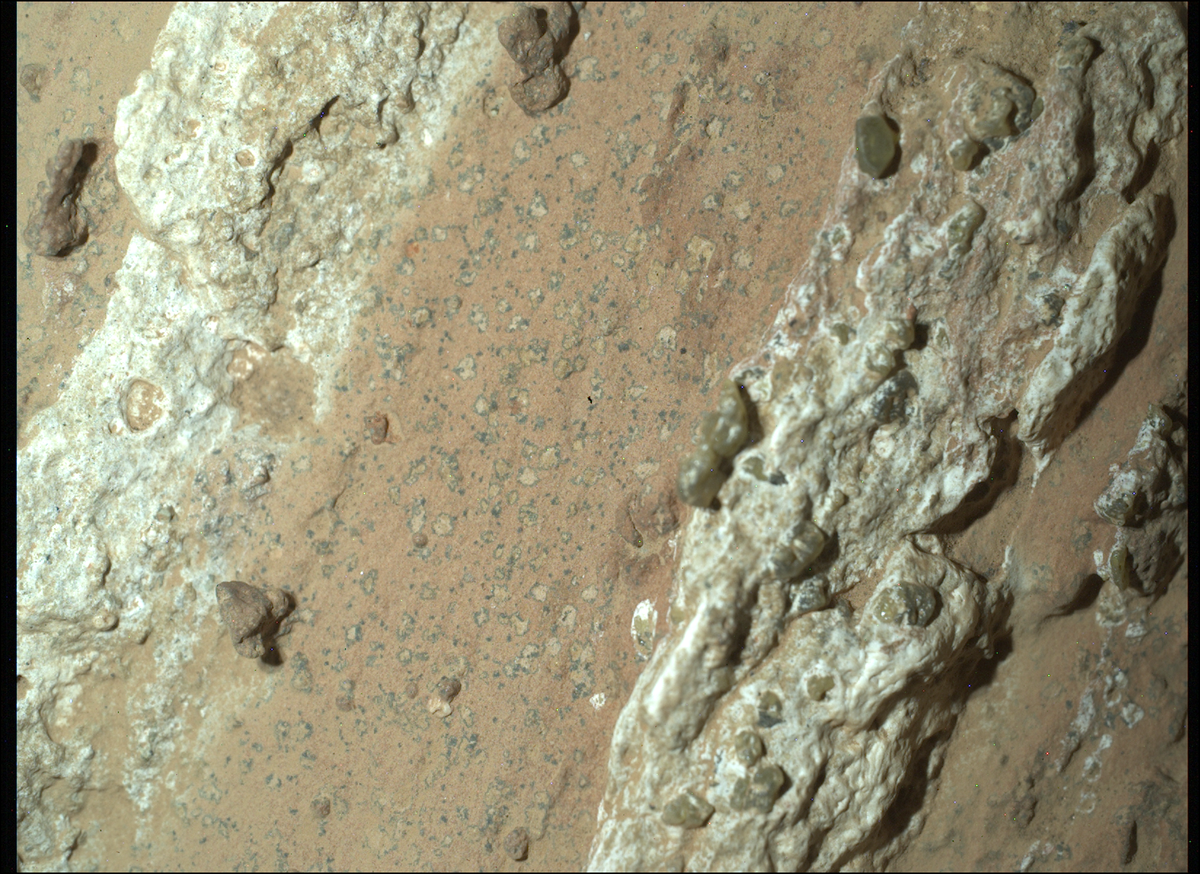
The rover has come across an intriguing, arrowhead-shaped rock that hosts chemical signatures and structures that could have been formed by microbial life billions of years ago, when Mars was significantly wetter than it is today. Inside the rock, which scientists have nicknamed “Cheyava Falls,” Perseverance’s instruments detected organic compounds, which are precursors to the chemistry of life as we know it. Wisping through the length of the rock are veins of calcium sulfate, which are mineral deposits that suggest water — also essential for life — once ran through the rock.
The rover also found dozens of millimeter-sized splotches, each surrounded by a black ring and mimicking the appearance of leopard spots. These rings contain iron and phosphate, which are also seen on Earth as a result of microbe-led chemical reactions.
“These spots are a big surprise,” David Flannery, an astrobiologist and member of the Perseverance science team from the Queensland University of Technology in Australia, said in a statement. “On Earth, these types of features in rocks are often associated with the fossilized record of microbes living in the subsurface.”