• Space/Science
  • GeekSpeak
  • Mysteries of
    the Multiverse
  • Science Fiction
  • The Comestible Zone
  • Off-Topic
  • Community
  • Flame
  • CurrentEvents

Recent posts

Supreme Court tries to do Trump a favor BuckGalaxy February 20, 2026 10:58 am (CurrentEvents)

Role reversal ER February 20, 2026 7:58 am (Off-Topic)

When Will This War End? The Question Is Meaningless. BuckGalaxy February 15, 2026 5:56 pm (CurrentEvents)

AI progress RL February 14, 2026 1:59 pm (Space/Science)

A Rubicon of Sorts ER February 12, 2026 5:33 pm (Space/Science)

Somebody help me out with telephone games. ER February 12, 2026 5:00 pm (CurrentEvents)

"Trump in heels" leads America's surrender in the global information war. BuckGalaxy February 11, 2026 12:08 pm (Flame)

Why do I do this to myself? podrock February 11, 2026 9:49 am (CurrentEvents)

Bad Musk Moon Rising BuckGalaxy February 10, 2026 12:07 pm (Space/Science)

Latinexus DEE-Fense ER February 9, 2026 6:48 pm (CurrentEvents)

Did we detect an exploding primordial black hole? RL February 7, 2026 5:29 pm (Space/Science)

Is anybody paying attention? ER February 6, 2026 4:47 pm (CurrentEvents)

Home » Space/Science

Apophis is Accelerating as Scientists Recalculate Odds for a 2068 Impact November 13, 2020 11:31 am DanS

Asteroid Apophis is Speeding Up as Scientists Recalculate Odds of 2068 Impact

By Elizabeth Howell | Live Science Contributor

NOVEMBER 11, 2020 | Astronomers say they’ll have to keep an eye on the near-Earth asteroid Apophis to see how much of a danger the space rock poses to our planet during a close pass in 2068. But don’t panic: The chances of an impact still seem very low.


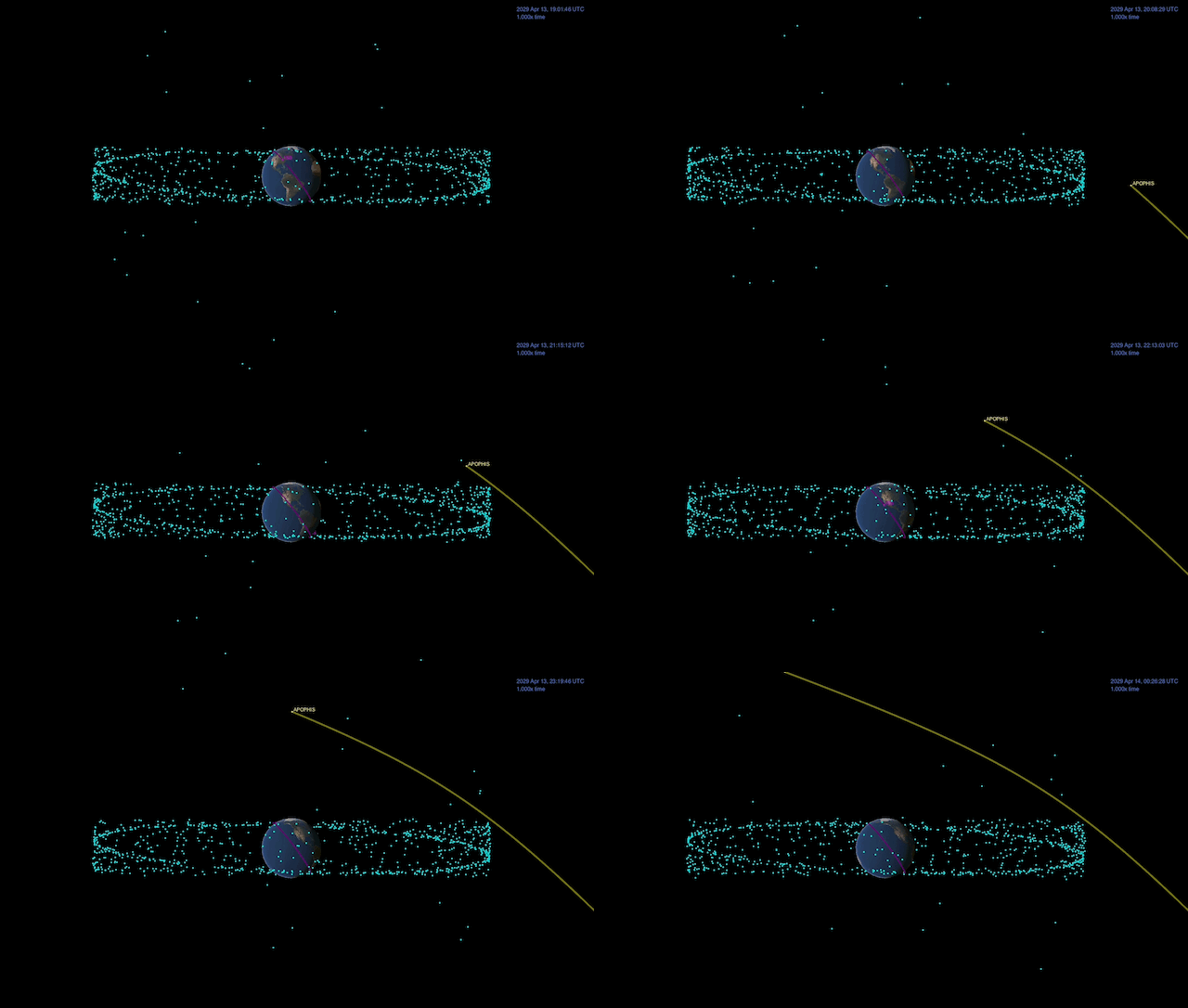
The near Earth asteroid Apophis, shown in yellow, will pass by Earth in 2029 within the distance that some satellites (shown in blue) orbit Earth. The purple line represents the International Space Station’s orbit. (Image credit: NASA/JPL-Caltech)

Under certain circumstances, the sun can heat an asteroid unevenly, causing the space rock to radiate away heat energy asymmetrically. The result can be a tiny push in a certain direction — an effect called Yarkovsky acceleration, which can change the path of an asteroid through space.

Since astronomers hadn’t measured this solar push on Apophis before, they didn’t take it into consideration when calculating the threat the asteroid poses to us in 2068. Those previous calculations showed a tiny impact probability — around 1 in 150,000.
  • Worrisome, but we'll be ready. by Vitruvius 2020-11-15 00:06:58

    Search

    The Control Panel

    • Log in
    • Register