NASA Budget Cuts at Mars Threaten ‘Crisis’ for Curiosity Rover and Prolific Orbiters
The Curiosity team may soon be forced into a difficult exploration decision.
By Mike Wall | Senior Space WriterSPACE.COM – April 30, 2020 | Budget cuts may force NASA’s Curiosity rover to slam on the brakes just as it’s reaching its highly anticipated home stretch.
Curiosity landed inside Mars’ 96-mile-wide (154 kilometers) Gale Crater in August 2012, tasked with determining if the site could ever have supported microbial life. The rover’s work quickly answered that question in the affirmative, showing that Gale hosted a long-lived lake-and-stream system in the ancient past.
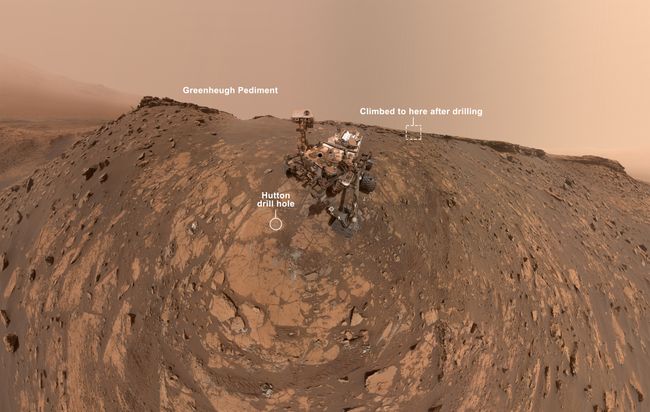
NASA’s Curiosity Mars rover took this selfie on Feb. 26, 2020. The crumbling rock layer at the top of the image is the Greenheugh Pediment, which Curiosity crested on March 6.
(Image: © NASA/JPL-Caltech/MSSS)The $2.5 billion mission also seeks to shed light on Mars’ long-ago shift from a relatively warm and wet world to the cold and dry planet we know today. Gale is well suited for such inquiry; it harbors a 3.4-mile-high (5.5 km) massif called Mount Sharp, whose many rock layers preserve a long history of Martian environmental conditions.
Budget Cuts at Mars
An End in 2022?
Not Just Curiosity