Experts Drilled Into A Crater And Discovered New Clues About How The Dinosaurs Died
By Staff WriterScientists basically knew what happened here – but the full story that’s emerging beggars belief. The Chicxulub crater marks the point of contact made by an asteroid so enormous that it wiped out an entire planet’s worth of dinosaurs. Yet now experts have dug deep into the massive cavity, and they’ve finally realized precisely what occurred when the space rock actually struck the Earth. What’s more, the team’s findings paint a truly terrifying picture.
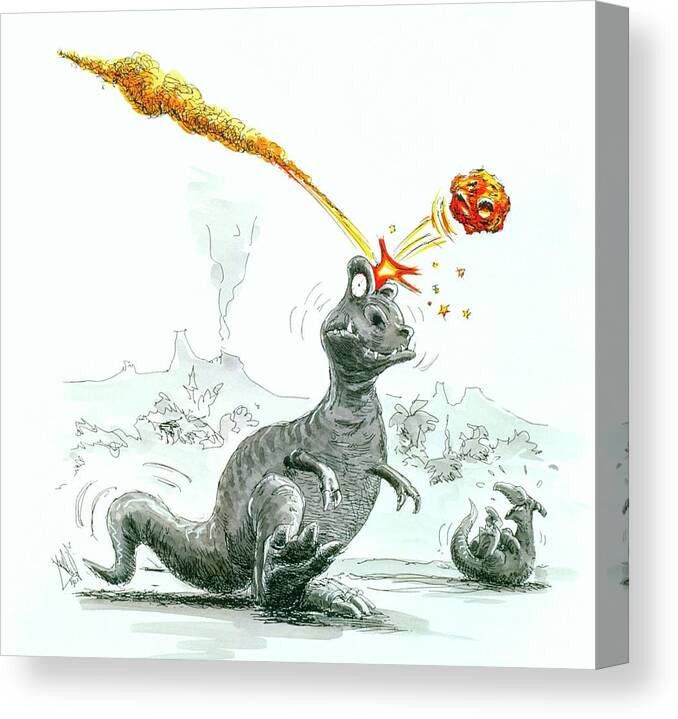
Caricature Of The Death Of Dinosaurs By Meteorite canvas print by Lutz Langedetlev Van RavenswaayOf course, much was already known about the Chicxulub crater. It stretches 93 miles in diameter, for instance, and plunges a stunning 12 miles into the ground. And of all the known impact points on Earth, the crater is the second-largest in the world. Yet even though it appeared about 66 million years ago, its peak ring remains in one piece.
This particular detail highlights just how stunning the Chicxulub crater – and its long-term preservation – has already proven to be. It’s the only crater on the planet that has its peak ring still intact, in fact. The next available one for scientists to study sits, rather inconveniently, on the moon.
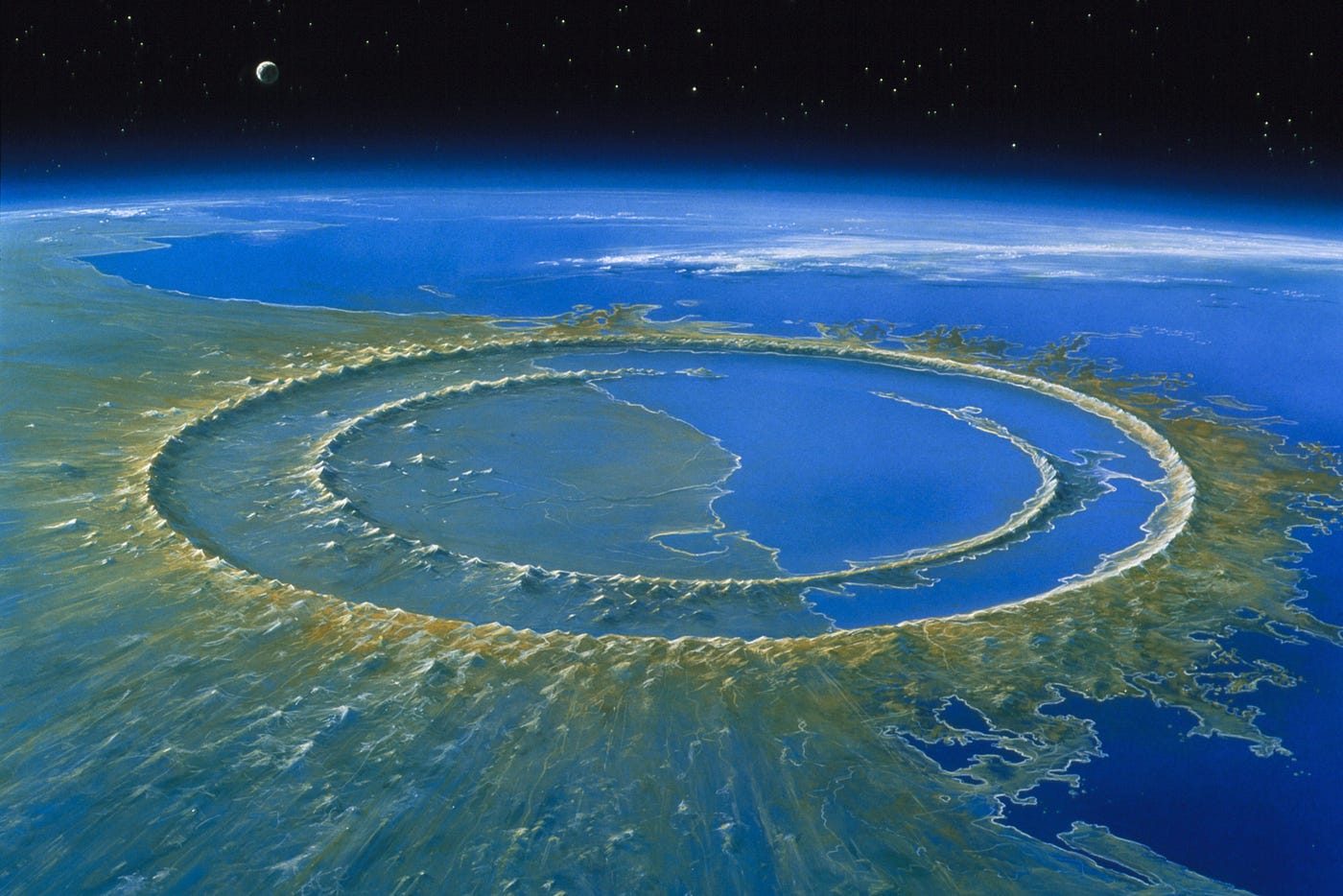
Artist’s interpretation of the Chicxulub craterStill, all of this information has to do with the crater’s dimensions and exterior features. Now, though, scientists have gone beyond the topical details of the Chicxulub crater. Digging into the expanse, which sits more than half a mile beneath Mexico’s Yucután Peninsula, experts in fact uncovered the impact that an up to 50-mile-wide asteroid had on the planet.