http://www.bbc.com/news/science-environment-39013829
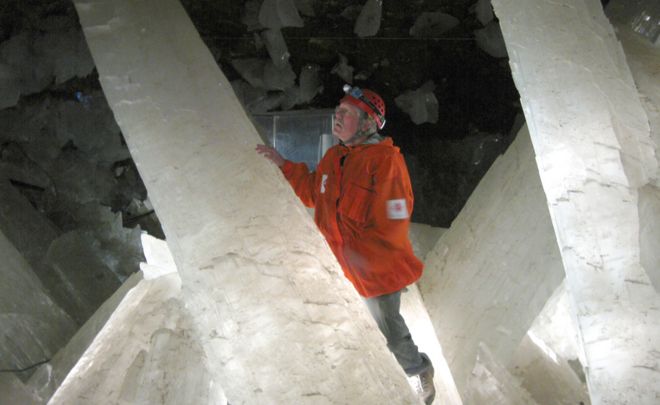
Scientists have extracted long-dormant microbes from inside the famous giant crystals of the Naica mountain caves in Mexico – and revived them.
The organisms were likely to have been encased in the striking shafts of gypsum at least 10,000 years ago, and possibly up to 50,000 years ago.
It is another demonstration of the ability of life to adapt and cope in the most hostile of environments.
“Other people have made longer-term claims for the antiquity of organisms that were still alive, but in this case these organisms are all very extraordinary – they are not very closely related to anything in the known genetic databases,” said Dr Penelope Boston.
The new director of Nasa’s Astrobiology Institute in Moffett Field, California, described her findings here at the annual meeting of the American Association for the Advancement of Science (AAAS).…
The environment is hot (40-60C), humid and acidic. With no light at depth, any lifeform must chemosynthesise to survive. That is, it must derive the energy needed to sustain itself by processing rock minerals.
Researchers had identified microbes living in the walls of the caves, but isolating them from inside the metres-long crystals is a surprise.
These outsized needles of gypsum have grown over millions of years. They are not perfect. In places they have defects – small voids where fluids have collected and become encased.