• Space/Science
  • GeekSpeak
  • Mysteries of
    the Multiverse
  • Science Fiction
  • The Comestible Zone
  • Off-Topic
  • Community
  • Flame
  • CurrentEvents

Recent posts

Blue Origin halts New Shepard flights BuckGalaxy January 31, 2026 3:13 am (Space/Science)

Trouble on the way BuckGalaxy January 28, 2026 1:47 pm (CurrentEvents)

Being a tech bro gets you a commission and a uniform podrock January 28, 2026 11:16 am (CurrentEvents)

Artificial Intelligence ER January 28, 2026 6:56 am (Flame)

Emily Blunt's favorite sandwich. ER January 27, 2026 7:46 am (Comestible Zone)

hey hey SDG January 26, 2026 10:38 pm (6)

‘Yes, it’s going to crack’ - a spacecraft not everyone thinks is safe to fly BuckGalaxy January 23, 2026 10:42 am (Flame)

Trump’s Greenland Gambit Has Broken Brains Across Washington BuckGalaxy January 21, 2026 8:38 pm (Flame)

This is so strange, on so many levels. ER January 21, 2026 5:13 pm (Off-Topic)

What's in your wallet? ER January 19, 2026 8:10 pm (CurrentEvents)

Anne Applebaum: Trump’s Letter to Norway Should Be the Last Straw BuckGalaxy January 19, 2026 7:18 pm (Flame)

Sloppy Seconds BuckGalaxy January 16, 2026 7:24 pm (Flame)

Home » Space/Science

The Suns of August September 5, 2012 5:22 pm ER

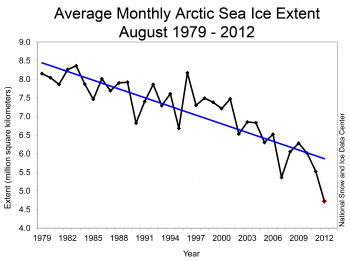
The National Snow and Ice Data Center has just released the arctic sea ice numbers for August, and as expected, the news is not good. Compared to the satellite record for previous Augusts, this year has broken all records.

http://nsidc.org/arcticseaicenews/
.

Of course, after breaking the previous record, 2007, on 24 Aug, the melting in the Arctic has not bottomed out yet. Traditionally, lowest ice in the N Polar Ocean occurs in mid-September, although it seems to be coming later every year now, and we still have a ways to go yet. You will note these are not statisical outliers, or marginal results, these are clear and obvious trends and the results are, to put it mildly, dramatic.

Sea ice minima are roughly half what they were just 30 years ago. There are 4 million square km more of dark ocean exposed to sunlight than there were three decades ago.

http://www.ijis.iarc.uaf.edu/en/home/seaice_extent.htm

.

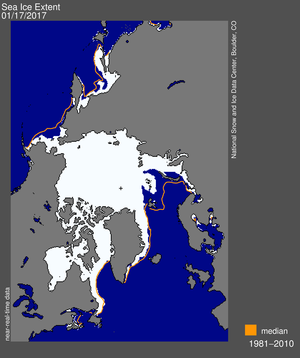
The orange line is the median ice extent for 4 Sept for the last decades of the 20th century. Think of it as how much summer ice was lost in just the last 12 years.
.

Next month’s numbers should be very interesting. Stay tuned.

  • Looks like it's dropping off that blue trendline, in the first graph. by alcaray 2012-09-05 22:17:28
    • As you no doubt know, the trendline is a linear regression. by ER 2012-09-06 04:13:39

    Search

    The Control Panel

    • Log in
    • Register